


Akinator
Elokence SAS
I installed Akinator expecting a quick guessing trick, and that is still the best way to understand it: it is a playful entertainment app that tries to identify the character in your head by asking a chain of questions. The appeal is not simply whether it reaches the right answer. The fun comes from choosing an awkward character, answering carefully, and watching the questions gradually narrow the possibilities.
That simple idea has held up remarkably well. Developed by Elokence SAS, the app has become one of those easy-to-share phone experiences that works with friends, family, and people who normally do not play mobile games. It is free to install, aimed at a Teen audience, and available for devices running Android 7.0 or later. The current version is 9.0.10, so the practical question is less “what does it do?” and more “will this particular style of guessing remain entertaining for me?”
How a normal round works
The basic workflow is wonderfully clear. I think of a person, fictional character, public figure, or another recognizable subject, then answer each question with the closest option available. The questions are usually broad at first and become more specific as the session continues. I do not need to prepare a name, search a database, or understand a complicated menu before starting.
The important habit is to answer according to the character I chose, not according to a vague association. If the question concerns appearance, profession, origin, or behavior, I try to keep the same interpretation throughout the round. That makes the result feel fairer and also reveals where my own knowledge is uncertain. When I am unsure, using an uncertain response is more useful than forcing a confident yes or no.
After enough questions, the app offers a guess. Sometimes it lands on the exact character, sometimes it proposes a close match, and sometimes it misses in a way that is entertaining rather than frustrating. The guessing process is the real activity; the final answer is the payoff. I especially enjoy rounds where the app appears to be heading toward a familiar choice and then suddenly asks something oddly specific.
Related News

Why WhatsApp Messenger Still Makes Everyday Communication Feel Easy

Jurassic World: The Game Is the Better Dino Tycoon for Strategic Players

Threads in Real Life: Who Should Join, Lurk, or Leave

How SHEIN Turned Shopping Into an Endless Content Feed

How to Make Fortnite Feel Smarter on Mobile

Should You Switch to Microsoft Outlook on Mobile?
A good everyday scenario is a short break with two or three people. One person secretly chooses a character, another operates the phone, and everyone debates how to answer. The app turns a waiting room, car journey, or quiet evening into a small conversation. It needs very little explanation, which is why it works better socially than many mobile games that require accounts, tutorials, or a long setup.
It is also useful as a light icebreaker. People reveal their interests without having to announce them directly, because the selected character often says something about the films, games, books, sports, or online culture they enjoy. I would not call it a deep game, but it creates a surprisingly natural reason for people to compare answers and challenge one another.
What makes the question flow enjoyable
The strongest part of the experience is the changing rhythm of the questions. Early prompts help establish a broad direction, while later ones test details that may separate similar possibilities. That progression gives each round a sense of movement. Even when I know the app may eventually guess a famous character, I still want to see which clues it considers important.
Gallery
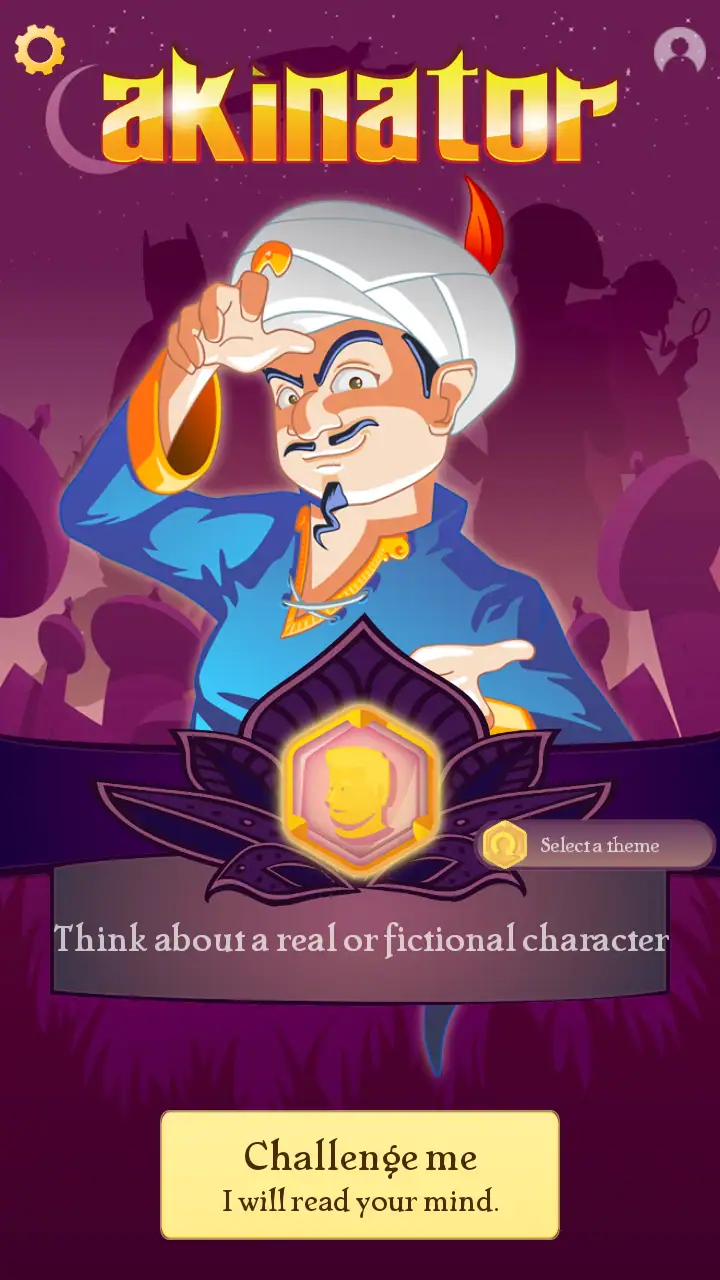
For the best results, I choose a character I know well and avoid answers based on fan theories or disputed details. If I pick someone from a series I barely remember, the result says as much about my uncertain answers as it does about the app. This is one of the first trade-offs: obscure choices can be more satisfying, but they demand more precise knowledge.
I also recommend treating the first round as a calibration exercise rather than a serious test. If a question seems ambiguous, note how the next few questions develop before deciding whether the interpretation was correct. The app is more enjoyable when I accept that the exchange is conversational and probabilistic, not a formal quiz with perfectly worded clues.
Settings, pacing, and repeatable habits
Before settling into regular use, I check the available settings instead of immediately starting another round. The exact options can vary with the version and device, but the useful principle is consistent: adjust the experience to the way you plan to play. If I am handing the phone around, I prefer a setup that keeps the interaction simple. If I am playing alone, I pay more attention to anything that affects the pace or presentation.
It is worth checking the language choice if more than one person is using the device. A question that feels obvious in one language can become less natural in another, especially when a character’s identity depends on cultural wording. Choosing the language most players understand reduces arguments about interpretation and keeps the guessing session moving.
I also look at notification and sound behavior before using the app in public. A guessing session does not need to be loud to work, and a quiet setting is usually more comfortable in a café, classroom break, or shared waiting area. This is a small adjustment, but it prevents the app from becoming distracting when the point is simply to fill a few minutes.
The app is free, although optional in-app purchases range from $0.99 to $9.99 per item. I can enjoy the central guessing activity without treating purchases as part of the basic routine. My advice is to play several rounds first and decide whether any optional extras genuinely improve your use. Buying something just because a screen presents it during a playful moment is rarely a good reason.
Because the content rating is Teen, I would still use ordinary judgment when younger children are involved. The format is approachable, but the possible characters and topics can reflect a broad entertainment culture. For family play, I would choose characters everyone knows and stay nearby rather than assuming the app will automatically fit every age group.
Small habits that improve accuracy
My most useful habit is deciding the exact identity before starting. “A superhero” is too broad, while a particular version of a superhero gives every answer a stable target. The same applies to actors, athletes, animated characters, and characters with multiple adaptations. When I choose a precise version, the questions become easier to answer consistently.
I also avoid changing my mind halfway through. If I begin with one character and then mentally substitute another because a question reminds me of someone else, the final guess becomes difficult to interpret. When that happens, I finish the round for the original choice and start a fresh one for the second idea. This makes repeat play more informative and prevents the question sequence from feeling random.
Another useful approach is to use difficult rounds as feedback. If the app repeatedly confuses two similar characters, I ask myself which distinguishing fact I failed to provide. That turns a miss into a lesson about the kind of clues that matter. It is not a formal learning system, but it helps experienced players become more deliberate rather than simply tapping through answers.
Faster patterns for short sessions
When I only have a few minutes, I choose a recognizable character with several clear traits. A well-known fictional figure is usually a better quick-round target than an obscure person whose biography I only partly remember. The point is not to make the app’s task easy; it is to reduce the time wasted on uncertain answers.
For group play, I use a simple rotation. One person selects the character, another answers, and the rest can challenge an answer before it is submitted. Then the phone moves to the next player. This keeps everyone involved and avoids the common problem where one person silently controls the entire round.
There is also a useful “theme night” pattern. Instead of picking completely unrelated subjects, we might stay within animation, classic films, game characters, or sports. The theme makes the choices more comparable and creates a natural competition: who can select the least obvious character while still answering every question correctly?
For solo play, I sometimes alternate between a familiar character and a deliberately difficult one. The familiar round shows how smoothly the questioning proceeds when I know the subject. The difficult round tests how much patience I have for uncertain clues. This alternating rhythm is more enjoyable than repeatedly choosing only famous characters, because it gives the session some variety without requiring a different app.
Experienced users should resist tapping quickly just to reach the guess. The fastest route is not always the quickest overall. A careless answer can send the questioning toward the wrong group of possibilities, creating more confusion later. I answer promptly when the clue is clear, but pause when a distinction matters. That balance keeps the game brisk without turning it into random tapping.
Where it differs from other entertainment apps
Compared with trivia apps, this experience asks less for stored knowledge and more for a consistent mental picture. I do not need to know a fact presented on a card; I need to know whether the chosen character fits the question. That makes it more accessible to mixed groups, because players can contribute through discussion even when they are not experts.
Compared with ordinary search tools, it is intentionally indirect. A search engine gives me an answer after I describe what I want, while this app makes me reveal the clues one by one. That is slower and less practical when I genuinely need information, but much more entertaining when the goal is a shared guessing challenge.
Compared with quiz games that depend on fixed question sets, the appeal here comes from the changing relationship between the hidden choice and the questions. I can replay it with a different character immediately. The downside is that the experience has less structure than a campaign-based game, so users looking for progression, levels, or a long-term competitive system may find it lightweight.
Advanced limits and when to move on
The biggest limitation is ambiguity. Many characters share occupations, appearances, story roles, or cultural associations, and a short question cannot always capture the distinction. A result that feels wrong may come from an answer that was technically reasonable but interpreted differently from the app’s intended category. I do not treat every miss as a failure; I look at the whole chain before judging it.
Very obscure or newly created characters are another weak spot. If a subject has little broad recognition, the guessing process may become less satisfying because the available clues do not narrow the field in a meaningful way. In that situation, a manual guessing game between friends can be better, since people can ask custom questions based on what they actually know.
The format can also become repetitive if I play too many rounds without changing the social setting or theme. The first few guesses feel fresh because I am curious about the result. Later, the same basic loop may lose energy. I solve that by taking breaks, inviting another player, or switching from famous choices to a carefully selected theme.
Privacy-conscious users should remember that the app’s central function depends on sending answers through an interactive service rather than keeping the entire experience as an offline paper game. I would avoid entering anything personal or treating the session as a private journal. For ordinary character guessing, that is not a serious obstacle, but it is a sensible boundary for any connected entertainment app.
People looking for a story, strategic depth, detailed customization, or a competitive ranking system should probably choose another category of game. This is not a replacement for a full quiz platform or a multiplayer title with progression. Its strength is immediacy: open it, think of someone, answer questions, and share the result.
The app has a 4.6 average from around 4.9 million ratings, with more than 100 million installs, which matches my impression that it is easy to understand and broadly appealing. Those figures do not guarantee that every round will be accurate or that every player will enjoy the repetition, but they help explain why the format has remained visible among entertainment apps. It succeeds because the first round requires almost no learning.
Who will enjoy it most
I recommend it to families with older children, groups of friends, casual players, and anyone who enjoys guessing games without a long commitment. It is especially good for people who like discussing whether a clue should count as a yes, no, or uncertain answer. That conversation is not a side effect; it is a major part of the entertainment.
I would be more cautious recommending it to someone who dislikes probabilistic results or expects a perfect answer every time. The fun depends on accepting occasional misses and treating them as part of the challenge. It is also not ideal for someone who wants a quiet solo game with a strong sense of progression, because the repeated question-and-guess loop is deliberately simple.
My verdict after building a routine around it
After using it in quick solo rounds and shared sessions, I see the best experience as a repeatable social habit rather than a one-time novelty. Pick a precise character, answer consistently, check the settings for the environment, and use themes or player rotation when the basic loop starts to feel familiar. Those small choices make a noticeable difference without pretending that the app is more complex than it is.
Elokence SAS has built an entertainment tool that is easy to start but still gives experienced users room to improve their approach. Its strengths are the low barrier to entry, the lively question progression, and the way it turns personal interests into conversation. Its weaknesses are equally clear: ambiguity can produce questionable guesses, obscure subjects may not work well, and extended solo play can become repetitive.
I would install it if I wanted a free, quick guessing activity for breaks or gatherings, especially because the central experience does not require a long tutorial. I would skip it when I need reliable factual search, deep gameplay, or structured long-term goals. For the right audience, though, it remains a charming little challenge: think of a character, answer honestly, and see whether the app can follow the trail in your head.
FAQs for Akinator
What is Akinator and how does it work?
Akinator is a virtual genie app that uses advanced algorithms to guess the character, real or fictional, that you are thinking of by asking a series of questions. The genie attempts to deduce the character by narrowing down possibilities based on your answers, making it a fun and interactive guessing game.
Is Akinator free to play?
Akinator offers a free version with limited features and ads. However, there are in-app purchases available that provide additional features, such as removing ads and accessing premium content. Users can decide if they want to enhance their experience by purchasing these features.
What platforms is Akinator available on?
Akinator is available for download on both Android and iOS platforms. Users can find it on the Google Play Store and Apple App Store. The app is designed to be user-friendly on smartphones and tablets, ensuring a seamless experience across multiple devices.
Does Akinator require an internet connection to play?
Yes, Akinator requires an internet connection to function properly. The app relies on an extensive online database to process your responses and update its questions dynamically. This ensures the genie can accurately guess a wide range of characters by accessing up-to-date information.
How does Akinator handle user privacy and data?
Akinator collects data to improve its algorithm and user experience. However, it adheres to privacy policies that protect user information. Before downloading, users should review the app’s privacy policy to understand how their data is used and ensure they are comfortable with the terms.
Pros
- Engaging and fun gameplay experience.
- Wide range of questions and topics.
- User-friendly interface design.
- Regular updates with new content.
- Multilingual support for global users.
Cons
- Requires internet connection to play.
- Ads can be intrusive at times.
- Limited free attempts per day.
- In-app purchases can be pricey.
- Occasional repetitive questions.


